Automated regulatory ALM reporting for small and mid-tier NBFCs
Asset/Liability Management Software for NBFCs
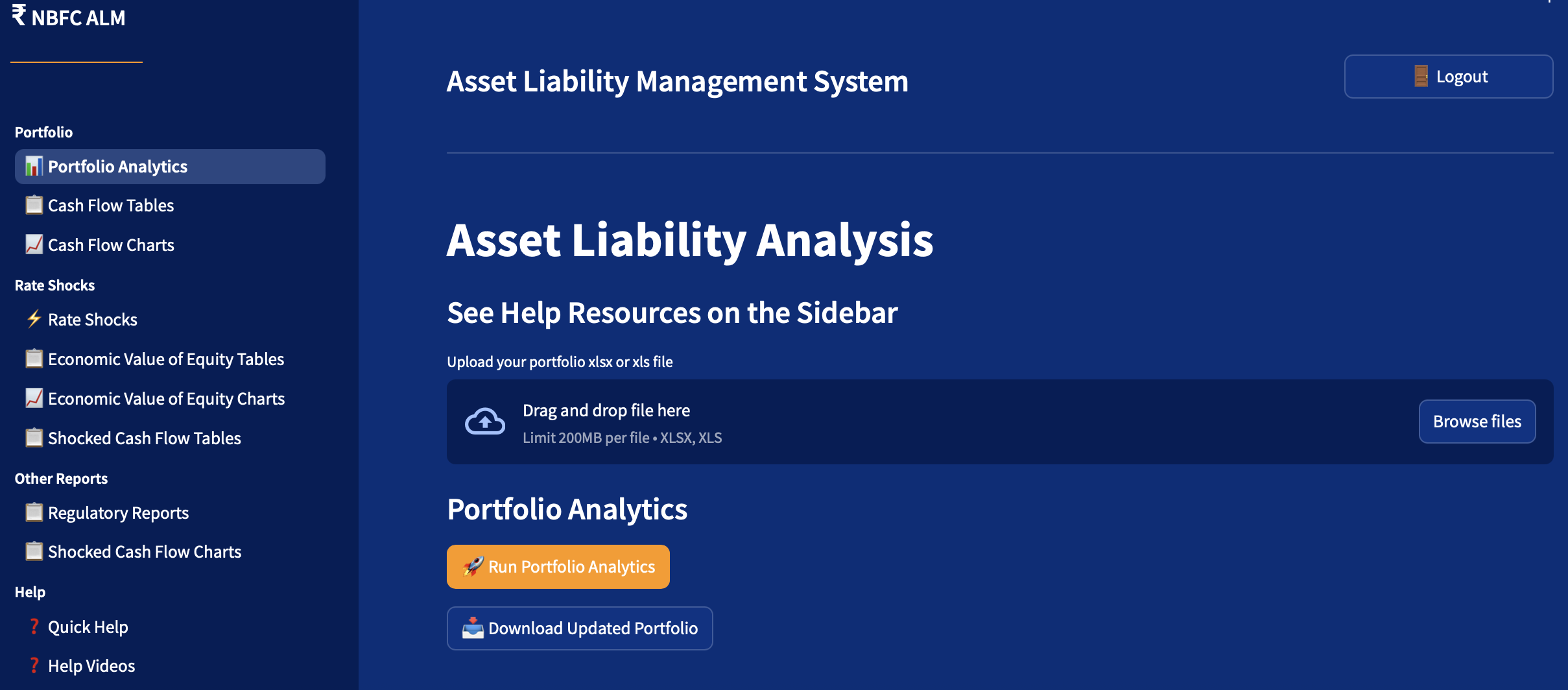
Automated regulatory ALM reporting for small and mid-tier NBFCs
One upload runs the full analytics and produces the complete set of regulatory ALM reports — reviewed on screen, ready to download.
Tetra Analytics is a cloud-based asset-liability management (ALM) application purpose-built for small and mid-tier Non-Banking Financial Companies (NBFCs). It automates regulator-mandated quarterly cash flow, structural liquidity, and interest-rate risk reporting — turning a single portfolio upload into a complete, submission-ready set of reports. By focusing only on the analytics NBFCs actually need, pricing is a minor fraction of the cost of enterprise ALM systems.
Fill in the instrument templates — loans, bonds, borrowings, deposits, swaps — and upload them, along with a rates file, through the Portfolio Analytics page. No databases, no IT project.
The platform merges your templates into a single portfolio and runs the full analytics: cash flows, valuations, rate shocks, EVE, NII, EaR, and liquidity and interest-rate gaps.
Review every table on screen and download each report to a formatted Excel workbook — ready for regulatory submission and for your own management reporting.
Visualize your cash flows, yield curves, and rate shock scenarios.
The regulatory reporting cadence is quarterly, but the model runs fast enough to check your interest-rate exposure as often as you like — weekly, if you choose.
All results are available for downloading.
Generate regulator-ready ALM reports for structural liquidity and interest-rate sensitivity each quarter.
Every table and report downloads to a formatted Excel workbook — ready for submission and for ad hoc management reporting.
Clients upload portfolio data through simple Excel templates. Complicated databases are not used.
Client data is never saved to the Cloud — it sits in memory for the session and is removed when the session ends.